
Browse past events for program agendas; summary reports; copies of presentations; presenter videos; and other event outputs.
2022
Reducing acrylamide exposure of consumers by a cereals supply-chain approach targeting asparagine
2022-09-15
Webinar, Zoom
Ciclo de conferencias alergias alimentarias, 4 sesión: Efecto del procesamiento de alimentos en la detección y cuantificación de alérgenos con ensayos ELISA
2022-09-07
Online, Online
Conferencia virtual: Cultura Positiva Inocuidad de los Alimentos
2022-08-31
Online, Online
4th Symposium on ‘Nutrition for the Ageing Brain’
2022-08-25 – 2022-08-26
Lisbon, Portugal
Join us to discuss and debate the potential for maintaining cognitive function through dietary intake. This event is supported by the Nutrition and Brain Health Task Force.
Ciclo de conferencias alergias alimentarias, 3 sesión: Metodologías para la identificación de alérgenos
2022-08-19
Online, Online
 ser alérgicas en cierta medida (Barlow et al, 2015). En la actualidad, las alergias alimentarias representan un serio problema de salud pública, debido a su alta incidencia en países desarrollados y aumento evidente en países en desarrollo (Blumenstock, 2018 & Dunlop et al, 2011).
 [post_title] => Ciclo de conferencias alergias alimentarias, 4 sesión: Efecto del procesamiento de alimentos en la detección y cuantificación de alérgenos con ensayos ELISA
[post_excerpt] =>
[post_status] => publish
[comment_status] => closed
[ping_status] => closed
[post_password] =>
[post_name] => ciclo-de-conferencias-alergias-alimentarias-4-sesion-efecto-del-procesamiento-de-alimentos-en-la-deteccion-y-cuantificacion-de-alergenos-con-ensayos-elisa
[to_ping] =>
[pinged] =>
[post_modified] => 2022-09-08 17:15:50
[post_modified_gmt] => 2022-09-08 21:15:50
[post_content_filtered] =>
[post_parent] => 0
[guid] => https://ilsi.org/?post_type=event&p=33017
[menu_order] => 0
[post_type] => event
[post_mime_type] =>
[comment_count] => 0
[filter] => raw
)
[2] => WP_Post Object
(
[ID] => 32966
[post_author] => 37
[post_date] => 2022-08-16 15:28:10
[post_date_gmt] => 2022-08-16 15:28:10
[post_content] =>
[post_title] => Ciclo de conferencias alergias alimentarias, 4 sesión: Efecto del procesamiento de alimentos en la detección y cuantificación de alérgenos con ensayos ELISA
[post_excerpt] =>
[post_status] => publish
[comment_status] => closed
[ping_status] => closed
[post_password] =>
[post_name] => ciclo-de-conferencias-alergias-alimentarias-4-sesion-efecto-del-procesamiento-de-alimentos-en-la-deteccion-y-cuantificacion-de-alergenos-con-ensayos-elisa
[to_ping] =>
[pinged] =>
[post_modified] => 2022-09-08 17:15:50
[post_modified_gmt] => 2022-09-08 21:15:50
[post_content_filtered] =>
[post_parent] => 0
[guid] => https://ilsi.org/?post_type=event&p=33017
[menu_order] => 0
[post_type] => event
[post_mime_type] =>
[comment_count] => 0
[filter] => raw
)
[2] => WP_Post Object
(
[ID] => 32966
[post_author] => 37
[post_date] => 2022-08-16 15:28:10
[post_date_gmt] => 2022-08-16 15:28:10
[post_content] =>
 Ahora el Codex establece que las empresas deben aplicar las prácticas de higiene y los principios de seguridad alimentaria para desarrollar, implementar y verificar procesos que proporcionen alimentos inocuos y adecuados para el uso previsto; asegurarse de que el personal sea competente según corresponda a sus actividades laborales; construir una cultura de inocuidad positiva demostrando su compromiso de proporcionar alimentos inocuos y alentando prácticas adecuadas de inocuidad alimentaria; contribuir a mantener la confianza en los alimentos comercializados a nivel nacional e internacional; y, asegurar que los consumidores tengan información clara y fácil de entender que les permita identificar la presencia de alérgenos alimentarios, proteger sus alimentos de la contaminación y prevenir el crecimiento o supervivencia de patógenos transmitidos por los alimentos al almacenar, manipular y preparar los alimentos correctamente.
- Compromiso de la dirección y de todo el personal con la producción y manipulación de alimentos inocuos;
- Liderazgo para establecer la dirección correcta e involucrar a todo el personal en las prácticas de seguridad alimentaria;
- Conciencia de la importancia de la higiene alimentaria por parte de todo el personal de la industria alimentaria;
- Comunicación abierta y clara entre todo el personal de la industria alimentaria, incluida la comunicación de desviaciones y expectativas; y
- La disponibilidad de recursos suficientes para garantizar el funcionamiento eficaz del sistema de higiene alimentaria.
Agenda y expositores invitados:
MS PhD. Marisa CaipoOficial de Inocuidad y Calidad de los alimentos. Punto focal regional para Resistencia a los antimicrobianos (RAM) y Una Salud. Organización de las Naciones Unidas para la Alimentación y la Agricultura (FAO), Oficina Regional para América Latina y el Caribe. Leer más...
Ponencia: Prioridades en inocuidad de alimentos en América Latina
MSc. Alberto Ibáñez NeriAuditor de tercera parte en normas de Calidad e Inocuidad para alimentos y empaques. Profesor Universidad de Santiago de Chile y Universidad de las Américas, Ecuador. Leer más...
Ponencia: Actualización de definiciones y conceptos
MSc. Rommel A. Betancourt HCoordinador Regional FAO/OMS para América Latina y el Caribe (CCLAC) Codex Alimentarius. Leer más...
Ponencia: Importancia del CODEX en la Región de CCLAC para el aseguramiento de la inocuidad de los alimentos
 [post_title] => Conferencia virtual: Cultura Positiva Inocuidad de los Alimentos
[post_excerpt] =>
[post_status] => publish
[comment_status] => closed
[ping_status] => closed
[post_password] =>
[post_name] => conferencia-virtual-cultura-positiva-inocuidad-de-los-alimentos
[to_ping] =>
[pinged] =>
[post_modified] => 2022-09-02 12:45:30
[post_modified_gmt] => 2022-09-02 16:45:30
[post_content_filtered] =>
[post_parent] => 0
[guid] => https://ilsi.org/?post_type=event&p=32966
[menu_order] => 0
[post_type] => event
[post_mime_type] =>
[comment_count] => 0
[filter] => raw
)
[3] => WP_Post Object
(
[ID] => 25018
[post_author] => 24
[post_date] => 2019-07-12 07:53:36
[post_date_gmt] => 2019-07-12 11:53:36
[post_content] =>
[post_title] => 4th Symposium on ‘Nutrition for the Ageing Brain’
[post_excerpt] =>
[post_status] => publish
[comment_status] => closed
[ping_status] => closed
[post_password] =>
[post_name] => 4th-symposium-on-nutrition-for-the-ageing-brain
[to_ping] =>
[pinged] =>
[post_modified] => 2022-10-24 04:22:25
[post_modified_gmt] => 2022-10-24 08:22:25
[post_content_filtered] =>
[post_parent] => 0
[guid] => https://ilsi.org/?post_type=event&p=25018
[menu_order] => 0
[post_type] => event
[post_mime_type] =>
[comment_count] => 0
[filter] => raw
)
[4] => WP_Post Object
(
[ID] => 32923
[post_author] => 37
[post_date] => 2022-08-08 21:03:20
[post_date_gmt] => 2022-08-08 21:03:20
[post_content] =>
[post_title] => Conferencia virtual: Cultura Positiva Inocuidad de los Alimentos
[post_excerpt] =>
[post_status] => publish
[comment_status] => closed
[ping_status] => closed
[post_password] =>
[post_name] => conferencia-virtual-cultura-positiva-inocuidad-de-los-alimentos
[to_ping] =>
[pinged] =>
[post_modified] => 2022-09-02 12:45:30
[post_modified_gmt] => 2022-09-02 16:45:30
[post_content_filtered] =>
[post_parent] => 0
[guid] => https://ilsi.org/?post_type=event&p=32966
[menu_order] => 0
[post_type] => event
[post_mime_type] =>
[comment_count] => 0
[filter] => raw
)
[3] => WP_Post Object
(
[ID] => 25018
[post_author] => 24
[post_date] => 2019-07-12 07:53:36
[post_date_gmt] => 2019-07-12 11:53:36
[post_content] =>
[post_title] => 4th Symposium on ‘Nutrition for the Ageing Brain’
[post_excerpt] =>
[post_status] => publish
[comment_status] => closed
[ping_status] => closed
[post_password] =>
[post_name] => 4th-symposium-on-nutrition-for-the-ageing-brain
[to_ping] =>
[pinged] =>
[post_modified] => 2022-10-24 04:22:25
[post_modified_gmt] => 2022-10-24 08:22:25
[post_content_filtered] =>
[post_parent] => 0
[guid] => https://ilsi.org/?post_type=event&p=25018
[menu_order] => 0
[post_type] => event
[post_mime_type] =>
[comment_count] => 0
[filter] => raw
)
[4] => WP_Post Object
(
[ID] => 32923
[post_author] => 37
[post_date] => 2022-08-08 21:03:20
[post_date_gmt] => 2022-08-08 21:03:20
[post_content] =>
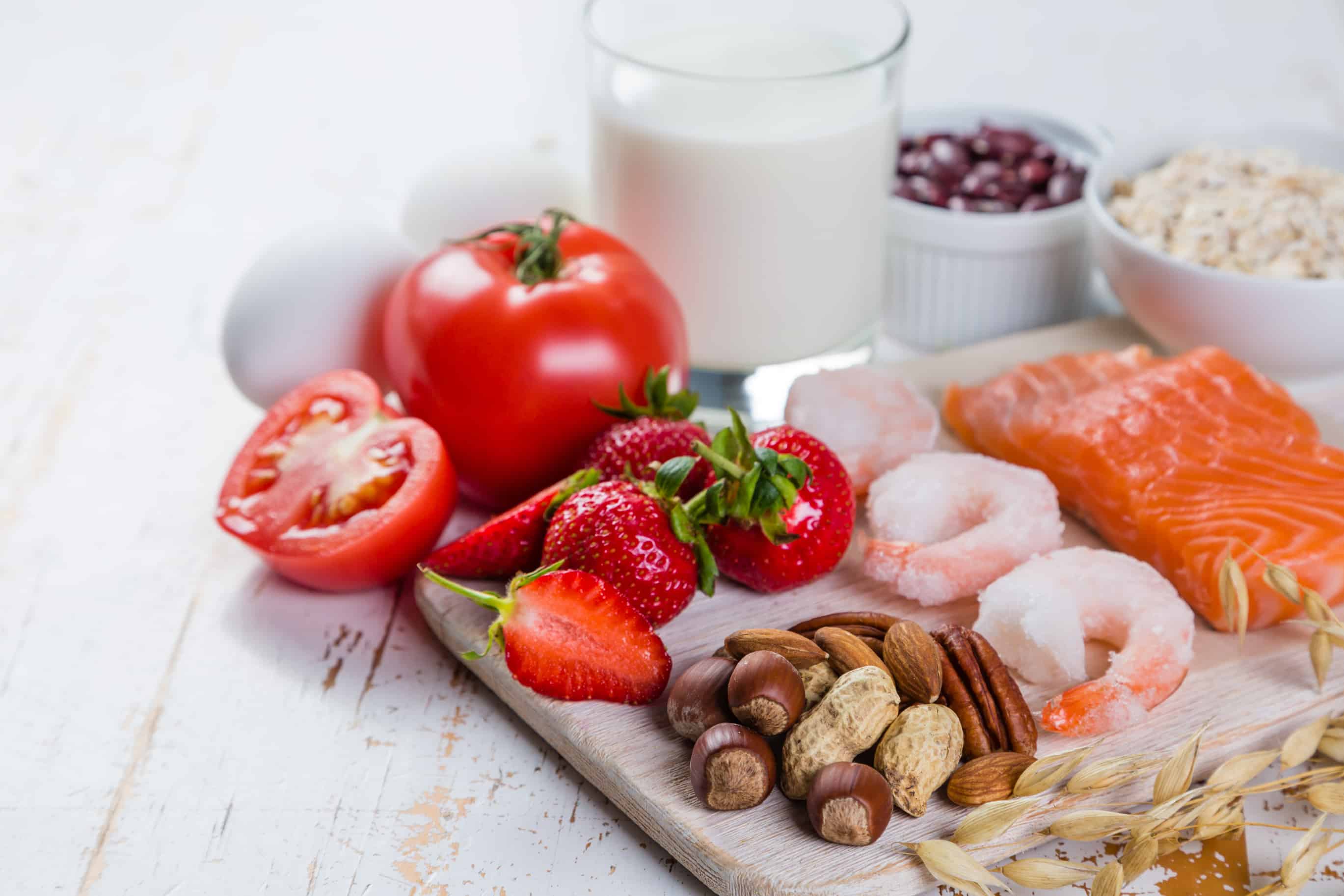
En general, los alérgenos alimentarios son proteínas y la mayoría, si no todas, pueden ser alérgicas en cierta medida (Barlow et al, 2015). En la actualidad, las alergias alimentarias representan un serio problema de salud pública, debido a su alta incidencia en países desarrollados y aumento evidente en países en desarrollo (Blumenstock, 2018 & Dunlop et al, 2011).
Pero estos últimos no cuentan con información científica que respalde las decisiones de políticas de salud pública y los subsecuentes reglamentos de industrias alimentarias y servicios de alimentación, por lo que se ven obligados a adoptar normativas internacionales que no han considerado los datos de prevalencia de las regiones a las cuales pertenecen.
El Comité de Análisis de Riesgos de ILSI Mesoamérica llevará a cabo una serie de seminarios web iniciando en el mes de julio en donde se analizarán temas relacionados a las alergias alimentarias
Agenda y expositores invitados:
MSc. María Gabriela Ortiz AvramGerente de ventas y asesora técnica de la empresa Scanco Internacional S.A
Ponencia: Metodologías cualitativas y cuantitativas en la identificación de alérgenos en los alimentos
Dra. Natalia Barboza VargasProfesora e investigadora de la Universidad de Costa Rica
Ponencia: PCR en tiempo real (qPCR) y detección de alérgenos en alimentos
Ing. Rodrigo García OrtegaEjecutivo de desarrollo para la empresa TSI Life Science Advance
Ponencia: Status Quo de la detección de alérgenos por MS
 [post_title] => Ciclo de conferencias alergias alimentarias, 3 sesión: Metodologías para la identificación de alérgenos
[post_excerpt] =>
[post_status] => publish
[comment_status] => closed
[ping_status] => closed
[post_password] =>
[post_name] => ciclo-de-conferencias-alergias-alimentarias-3-sesion-metodologias-para-la-identificacion-de-alergenos
[to_ping] =>
[pinged] =>
[post_modified] => 2022-09-02 12:47:32
[post_modified_gmt] => 2022-09-02 16:47:32
[post_content_filtered] =>
[post_parent] => 0
[guid] => https://ilsi.org/?post_type=event&p=32923
[menu_order] => 0
[post_type] => event
[post_mime_type] =>
[comment_count] => 0
[filter] => raw
)
)
[post_count] => 5
[current_post] => -1
[before_loop] =>
[in_the_loop] =>
[post] => WP_Post Object
(
[ID] => 32981
[post_author] => 24
[post_date] => 2022-08-24 09:10:09
[post_date_gmt] => 2022-08-24 09:10:09
[post_content] =>
[post_title] => Ciclo de conferencias alergias alimentarias, 3 sesión: Metodologías para la identificación de alérgenos
[post_excerpt] =>
[post_status] => publish
[comment_status] => closed
[ping_status] => closed
[post_password] =>
[post_name] => ciclo-de-conferencias-alergias-alimentarias-3-sesion-metodologias-para-la-identificacion-de-alergenos
[to_ping] =>
[pinged] =>
[post_modified] => 2022-09-02 12:47:32
[post_modified_gmt] => 2022-09-02 16:47:32
[post_content_filtered] =>
[post_parent] => 0
[guid] => https://ilsi.org/?post_type=event&p=32923
[menu_order] => 0
[post_type] => event
[post_mime_type] =>
[comment_count] => 0
[filter] => raw
)
)
[post_count] => 5
[current_post] => -1
[before_loop] =>
[in_the_loop] =>
[post] => WP_Post Object
(
[ID] => 32981
[post_author] => 24
[post_date] => 2022-08-24 09:10:09
[post_date_gmt] => 2022-08-24 09:10:09
[post_content] =>
Watch the Webinar HERE
Presentations
Dr Mafalda Quintas - Prof. Nigel Halford
Speaker
Prof. Nigel Halford - Rothamsted Research (UK)
Abstract
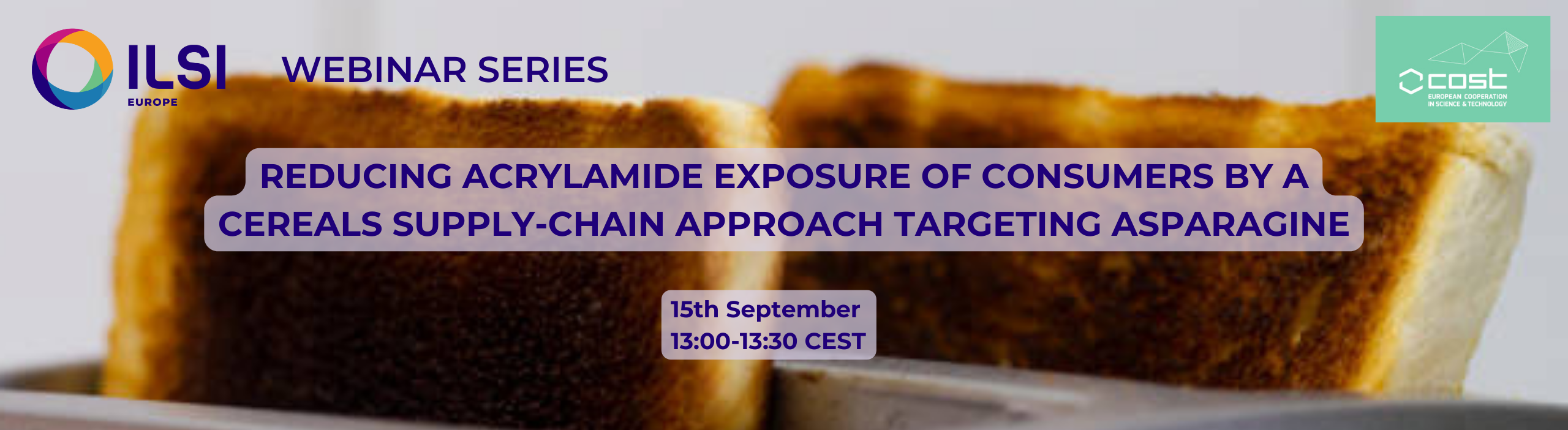
Acrylamide forms during industrial food processing and home cooking. For years, the cereals processing industry has been engaged in reducing acrylamide formation through production process optimisations and establishment of guidelines.The 2017 EC Regulation on acrylamide sets benchmarks on acrylamide levels in food, which are considered to be either challenging or insufficient, depending on who is asked. However, if no drastic action is taken, future regulations may threaten the availability of cereals brands.
A new 4 year COST action, called ACRYRED has kicked-off this fall. ACRYRED's challenge is to establish a multi-disciplinary research and communication network on reducing acrylamide formation, involving the entire value chain from grains to consumer products. If asparagine levels can be reduced through better varieties and farming practices, downstream acrylamide formation in cereals-based products could be reduced significantly. Workstreams will also include integration of knowledge on food chemistry and processing, the risk-benefit of Maillard reaction products, and the economic consequences of mitigation measures that may become available.
Join this webinar to hear more about the action, the partners involved and how you can sign up, from the project leader, Prof. Nigel Halford (Rothamsted Research).
The memorandum of understanding and management committee of ACRYRED can be found here.
Contact Information
Dr Konrad Korzeniowski - ILSI Europe Scientific Project Manager (kkorzeniowski@ilsieurope.be)
[post_title] => Reducing acrylamide exposure of consumers by a cereals supply-chain approach targeting asparagine [post_excerpt] => [post_status] => publish [comment_status] => closed [ping_status] => closed [post_password] => [post_name] => reducing-acrylamide-exposure-of-consumers-by-a-cereals-supply-chain-approach-targeting-asparagine [to_ping] => [pinged] => [post_modified] => 2022-09-20 09:43:18 [post_modified_gmt] => 2022-09-20 13:43:18 [post_content_filtered] => [post_parent] => 0 [guid] => https://ilsi.org/?post_type=event&p=32981 [menu_order] => 0 [post_type] => event [post_mime_type] => [comment_count] => 0 [filter] => raw ) [comment_count] => 0 [current_comment] => -1 [found_posts] => 66 [max_num_pages] => 14 [max_num_comment_pages] => 0 [is_single] => [is_preview] => [is_page] => [is_archive] => [is_date] => [is_year] => [is_month] => [is_day] => [is_time] => [is_author] => [is_category] => [is_tag] => [is_tax] => [is_search] => [is_feed] => [is_comment_feed] => [is_trackback] => [is_home] => 1 [is_privacy_policy] => [is_404] => [is_embed] => [is_paged] => 1 [is_admin] => [is_attachment] => [is_singular] => [is_robots] => [is_favicon] => [is_posts_page] => [is_post_type_archive] => [query_vars_hash:WP_Query:private] => ae270771af54ba67d747df5c93c2fc0d [query_vars_changed:WP_Query:private] => [thumbnails_cached] => [allow_query_attachment_by_filename:protected] => [stopwords:WP_Query:private] => [compat_fields:WP_Query:private] => Array ( [0] => query_vars_hash [1] => query_vars_changed ) [compat_methods:WP_Query:private] => Array ( [0] => init_query_flags [1] => parse_tax_query ) )